


Digital transformation is often discussed in terms of technology: cloud platforms, artificial intelligence, digital identity, automation, data and new applications.
But technology is only one part of the transformation.
The larger opportunity is to build a digital economy in which government, businesses, entrepreneurs, investors and citizens can participate more efficiently, create new forms of value and connect to regional and global markets.
For emerging economies such as Sri Lanka, the question should therefore move beyond “What should we digitise?” to “What economic opportunities can digital capability enable?”
From Digital Transformation to Digital Economy
Digitising existing processes can improve efficiency, but a digital economy requires a broader ambition. It means using digital capability to change how government operates, how businesses compete, how entrepreneurs create new services and how a country participates in regional and global markets.
The distinction matters. Digital transformation should not become a collection of disconnected technology projects. It should contribute to measurable economic and societal outcomes.
Building the Enabling Environment
Government has an important role, but it does not need to build everything itself. Digital public infrastructure, effective regulation, trusted digital identity, interoperable platforms and access to data can create an environment in which the private sector and entrepreneurs can innovate.
Public-private collaboration can therefore become an important part of building the digital economy.
AI, Data and the Next Productivity Opportunity
Artificial intelligence is creating another significant shift. The opportunity extends beyond adopting individual AI tools. AI and data can improve productivity, transform public services, strengthen industries and enable entirely new business models.
For countries such as Sri Lanka, the challenge is to determine where these technologies can create genuine economic advantage rather than simply following global technology trends.
Connecting Japan, Sri Lanka and India
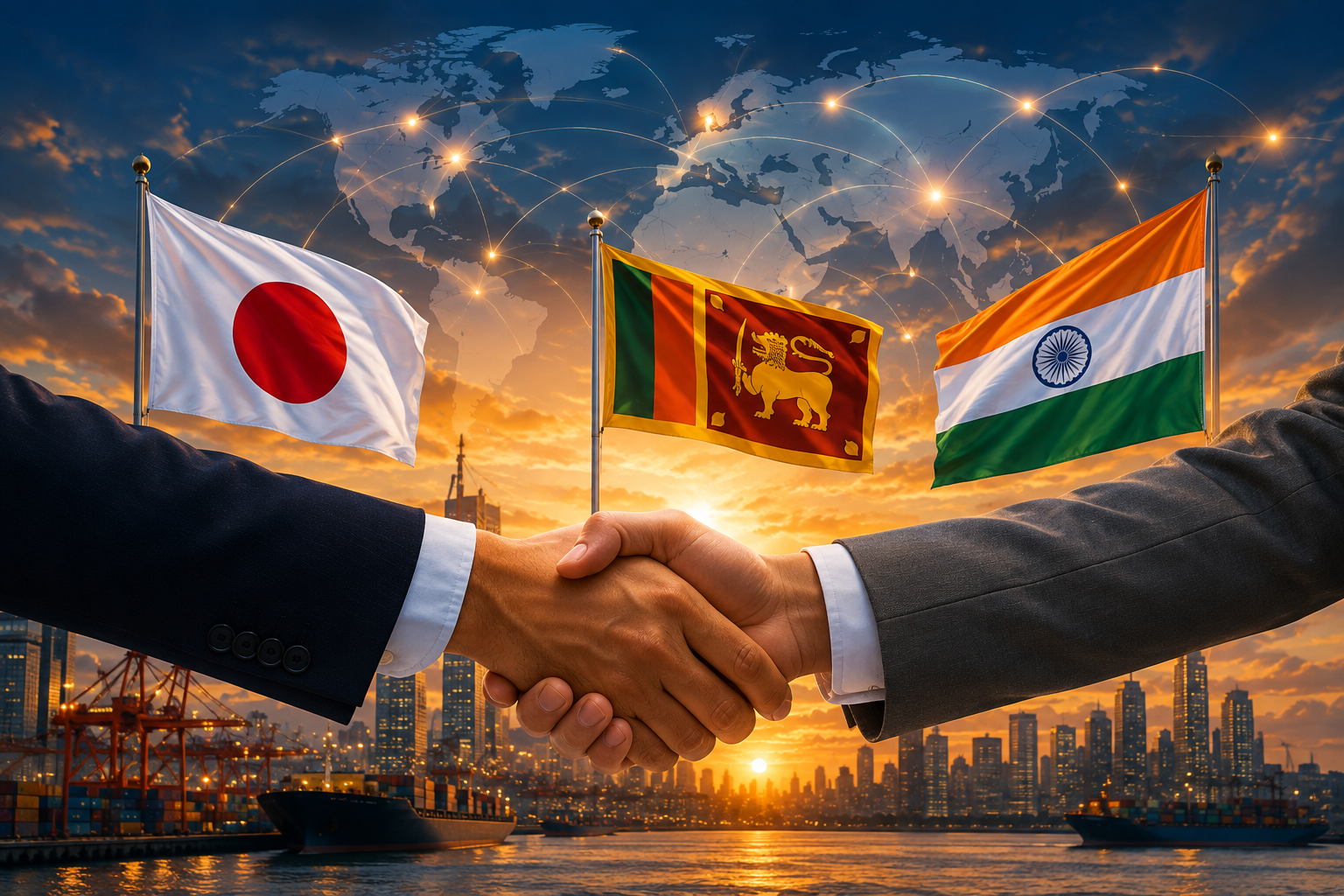
There is also a compelling regional dimension. Japan brings industrial strength, technology, investment capability and a long tradition of quality and innovation. India represents one of the world’s largest and fastest-developing digital economies. Sri Lanka brings talent, geographic proximity and an emerging innovation ecosystem.
Connecting these strengths creates the possibility of a Japan–Sri Lanka–India digital economic corridor in which technology, investment, innovation and market access reinforce each other.
From Technology to Economic Transformation
Digital transformation should ultimately be judged not by how much technology has been deployed, but by what that technology enables.
Does it improve productivity? Does it make government and business easier to engage with? Does it create new companies, jobs and investment? Does it enable local businesses to participate in international markets? Does it improve people’s everyday lives?
When these questions become the measures of success, digital transformation stops being primarily an IT agenda.
It becomes an economic transformation agenda.